UMSON Faculty Awarded More Than $6 Million in State Grants to Strengthen Maryland’s Nursing Workforce
July 2, 2026
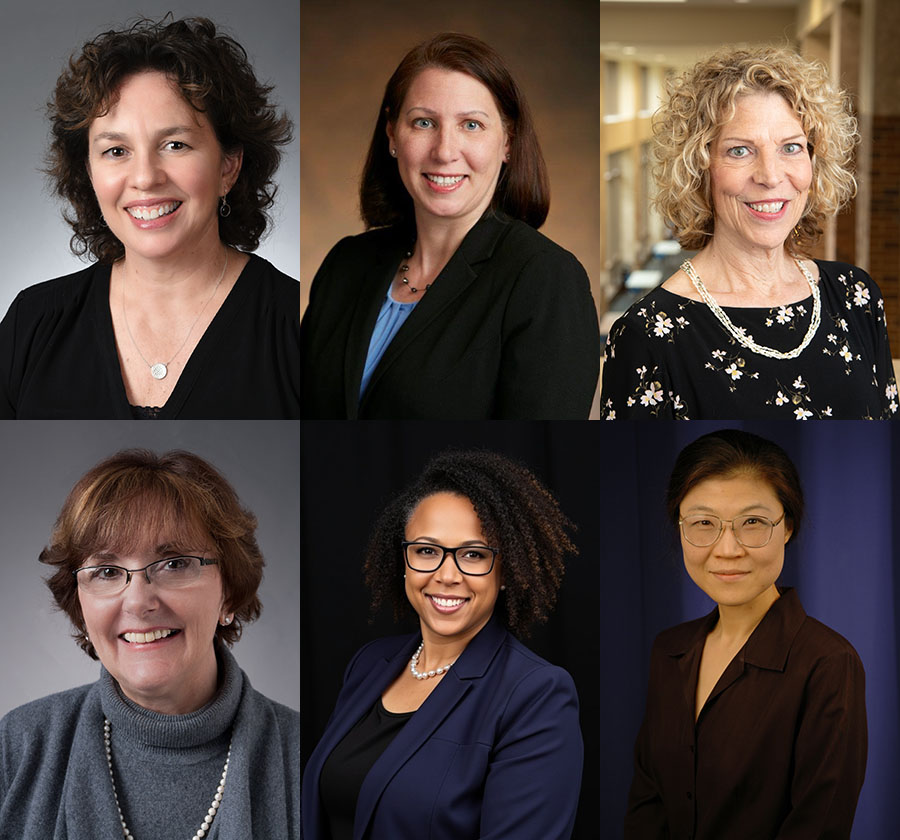
Baltimore, Md. – Six University of Maryland School of Nursing (UMSON) faculty members have been awarded Nurse Support Program (NSP) II grants totaling more than $6.03 million to strengthen nursing education and workforce development across Maryland. The grants support initiatives focused on faculty preparation, leadership development, student enrollment, clinical education, workforce infrastructure, and doctoral education.
Funded through the Maryland Health Services Cost Review Commission and administered by the Maryland Higher Education Commission, NSP II grants support statewide efforts to increase nursing capacity by expanding the number of nurses prepared for faculty roles and strengthening nursing education programs.
The NSP II grants awarded to UMSON beginning in Fiscal Year 2027 include:
- Susan L. Bindon, DNP ’11, MS ’96, RN, NPD-BC, CNE, FAAN, ANEF, professor, associate dean for faculty development, and director of both the Institute for Educators and the Teaching in Nursing and Health Professions Certificate - “Preparing Clinical Nurse Faculty Across Maryland Continuation Grant” ($894,124 over five years)
This project will expand UMSON's efforts to prepare clinical nursing faculty across Maryland through workshops, professional development, and certification support. The initiative is expected to prepare 525 additional clinical instructors and support national certification for eligible participants, ultimately benefiting thousands of nursing students statewide.
Clinical faculty play vital roles in students’ real-world learning experiences, and hundreds are needed across Maryland’s nursing programs. Unlike full-time faculty peers, adjunct clinical faculty may not be educated in how to teach.
- Lynn Marie Elizabeth Bullock, DNP, RN, NEA-BC, assistant professor and director of the Office of Professional Education - “Nurse Leadership Institute 3.0 Continuation Grant” ($1,756,581 over five years)
Building on the success of the Nurse Leadership Institute (NLI), which has trained more than 200 fellows and nearly 200 mentors, this statewide initiative will continue developing nurse leaders in academic and practice settings. The project will expand recruitment to non-acute care environments, strengthen mentor development, and increase statewide engagement through regional networking opportunities
Over the past five years, participation in NLI has been broad and inclusive, with fellows drawn from 30 academic institutions and 174 practice organizations across Maryland. The newly funded NLI will remain nurse led and practice and academia centric. It will also ensure representation across diverse practice environments and strengthen mentor development through structured training, resources, and evaluation. The grant will also support designing and implementing annual regional networking events in Eastern and Western Maryland and underserved communities to promote statewide engagement and equitable access.
- Lori Edwards, DrPH, BSN '80, RN, CNS-PCH, BC, FAAN, associate professor and associate dean for the Master of Science in Nursing program - “Expansion of Enrollment Post-COVID Continuation” ($1,165,289 over five years)
This project seeks to address Maryland's nursing workforce shortage by expanding enrollment in entry-into-nursing programs while strengthening the clinical education infrastructure needed to support growth. Key strategies include targeted recruitment, student support services, and expansion of the Practicum-to-Practice Program mentorship model.
The initiative builds on UMSON’s longstanding partnership with the University of Maryland Medical System and the success of the Academy of Clinical Education to increase the supply of practice-ready nurses statewide.
- Linda J. Hickman, PhD '98, MBA, RN, FACHE, assistant professor - “Supporting and Retaining Undergraduate Nursing Preceptors” ($1,100,329 over three years)
The project will strengthen undergraduate nursing preceptorship by redesigning UMSON's clinical practicum resources and establishing the Maryland Clinical Preceptor Academy. Working with six Maryland hospitals, the initiative aims to prepare and support more than 400 clinical preceptors while improving clinical education capacity and student readiness for licensure.
Clinical preceptorship is a critical part of undergraduate nursing education and workforce sustainability, yet staff nurse preceptors often report lack of preparation, limited support, and high workload, contributing to burnout and reduced clinical education capacity. The project proposes to strengthen undergraduate nursing preceptorship by linking two aims: to redesign UMSON’s clinical practicum course, focusing on resources to support preceptors disseminated as a standardized model, and to establish the Maryland Clinical Preceptor Academy, combining accredited preceptor training, recognition, practical benefits, and rewards while promoting professional advancement and lifelong learning through statewide development models.
- Danielle McCamey, DNP, CRNP, ACNP-BC, FAAN, FAANP, FCCP, FADLN, assistant professor and associate dean for clinical partnerships and innovation - “Maryland Clinical Placements Collaborative Infrastructure Initiative” ($661,479 over three years)
This project will transform the Maryland–D.C. Clinical Placements Collaborative pilot into a formal statewide infrastructure. Through stronger education-practice partnerships, data-driven planning tools, and professional development opportunities, the initiative will improve access to clinical placements and support enrollment growth across Maryland nursing programs.
Maryland faces a critical nursing workforce shortage, with hospitals reporting RN vacancy rates as high as 25.4% and a projected need for 13,800 additional RNs by 2035. Although nursing programs have academic capacity to enroll more students, fragmented and competitive clinical placement processes constrain enrollment growth and workforce supply. The Maryland Clinical Placements Collaborative Infrastructure Initiative (MCPC) will establish statewide governance for education–practice partnerships; develop a data-driven dashboard to improve transparency, capacity planning, and equity; strengthen professional development for clinical placement professionals; and create a sustainability plan. MCPC will enable nursing programs to maximize utilization of clinical sites, expand enrollment capacity, and ensure equitable access to clinical training across program types and geographic regions.
- Eun-Shim Nahm, PhD '03, RN, FAAN, FGSA, professor, associate dean for the PhD Program, and co-director of the Real-World Data and Pragmatic Research Certificate - “Innovative Pathways Expanding MD PhD Workforce” ($456,915 over three years)
This project will address declining PhD enrollment and shortages of qualified nursing faculty by creating innovative educational pathways for future nurse scientists. The overarching aim is to implement innovative pathways to expand Maryland’s Doctor of Philosophy (PhD)-prepared nursing workforce. The project addresses two critical nursing challenges: declining enrollment in PhD programs and the rapidly increasing shortage of qualified nursing faculty. It also promotes the Bachelor of Science in Nursing (BSN)-to-PhD pathway to reduce time to degree completion.
Through this project, UMSON will establish and implement PhD research focus areas in education and clinical practice by integrating existing nursing education and the Real-World Data and Pragmatic Research certificate programs, enabling students to earn both the PhD and the certificate without increasing credit requirements. The project also aims to build a supply of PhD applicants to increase admissions to the BSN-to-PhD track through innovative recruitment and academic support strategies and to promote practice-to-PhD pathways through collaboration with hospital nurse leaders.
###
The University of Maryland School of Nursing, founded in 1889, is one of the oldest and largest nursing schools in the nation and is ranked among the top nursing schools nationwide. Enrolling nearly 2,100 students in its baccalaureate, master’s, and doctoral programs, the School develops leaders who shape the profession of nursing and impact the health care environment.