News and Events
Latest News
Conyers, Five UMSON Alumni Named 2026 Fellows of American Academy of Nursing; Two Alumni Receive National Honors
October 8, 2026
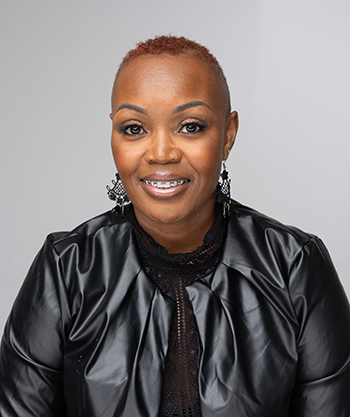
Baltimore, Md. – Yvette Conyers, DNP, RN, FNP-C, CTN-B, CFCN, CFCS, CNE, FADLN, CWCN-AP, FNAP, FAAN, assistant professor and associate dean for strategic engagement and impact at the University of Maryland School of Nursing (UMSON), and five UMSON alumni have been selected as 2026 Fellows of the American Academy of Nursing (AAN). The new fellows are recognized for their substantial contributions to improving health outcomes and advancing health and health care.
The class of 275 new AAN Fellows represents 39 states, the District of Columbia, and 17 countries. They will be honored Oct. 10 at an induction ceremony held during the annual AAN Health Policy Conference in Washington, D.C. With the addition of the 2026 class, AAN fellowship will include more than 3,600 nurses worldwide recognized for leadership in policy, research, administration, practice, and academia.
The five UMSON alumni joining Conyers as 2026 fellows are:
Lauren B. Covington, PhD ’18, MS ’12, MS, RN, FAAN, associate professor, University of Delaware School of Nursing
Mazen El Ghaziri, PhD ’13, MPH, RN, FAAOHN, FAAN, associate professor and associate chair, University of Massachusetts Lowell Susan and Alan Solomont School of Nursing
Jennifer Saylor, PhD ’11, APRN, ACNS-BC, FAAN, professor (tenured) and associate dean for faculty and student affairs, University of Delaware School of Nursing
Tania T. Von Visger, PhD, MS ’94, BSN ’90, APRN, ASTF, PCCN-K, FAAN, assistant professor, Medical University of South Carolina College of Nursing
Qiuping Pearl Zhou, PhD ’01, RN, FAAN, associate professor (tenured), George Washington University School of Nursing.
Inductees are selected following a rigorous review of applications by AAN’s Fellow Selection Committee and International Subcommittee.
In addition, AAN will present two of its most significant individual honors to UMSON alumnae Visionary Pioneers during the Health Policy Conference:
Patricia A. Grady, PhD, MS ’68, RN, FAAN, a nurse scientist and inaugural UMSON Visionary Pioneer, will receive the Rheba De Tornyay President’s Award, AAN’s highest individual achievement award. It honors an elected fellow for extraordinary lifelong contributions to community and individual health. Grady, former director of the National Institute of Nursing Research (NINR) for more than 23 years, is an internationally known researcher. Under her leadership, NINR significantly increased the number of research and training grants awarded to nurse scientists. She initiated several major NINR research programs, including end-of-life, self-management of chronic illness, health disparities, and genetics.
Ann Wolbert Burgess, DNSc, MS ’59, RNCS, FAAN, a world-renowned expert in forensic and psychiatric nursing, will receive the Lifetime Legacy Award, which honors individuals who have dedicated their careers to sweeping health system changes, structural transformation, and policy reform. As a faculty member at Boston College, she has advanced the understanding of trauma’s psychological effects, particularly among victims of sexual violence and serial crime. Her groundbreaking collaborations with the FBI and her widely cited scholarship have earned her numerous honors.
“We congratulate Dr. Conyers on the honor of being named a Fellow of the American Academy of Nursing,” said Yolanda Ogbolu, PhD' 11, MS '05, BSN '04, NNP, FNAP, FAAN, the Bill and Joanne Conway Dean of the University of Maryland School of Nursing. “It is a significant tribute to her commitment to excellence and her contributions to the profession through nursing practice and education and to her work in advancing understanding of the significant role nurses can play in policy advocacy.
“We also congratulate our five distinguished alumni for this important recognition of their leadership and many contributions to nursing research, education, and practice. We are particularly thrilled to see the recognition of Dr. Ann Wolbert Burgess and Dr. Patricia A. Grady. Dr. Burgess’ contributions to understanding the impact of trauma on its victims and her pioneering work in developing assessment and treatment modalities has transformed care, while her study of the psychological background of perpetrators has guided profiling practices. Dr. Grady’s contributions as a neuroscientist and her exceptional leadership as director of the National Institute of Nursing Research for more than two decades elevated nursing research and fostered the careers of many of today’s preeminent nurse scientists.”
Conyers, who joined UMSON in 2023, is a nurse practitioner, educator, and health equity advocate with more than two decades of experience in health care, academia, and community engagement. Specializing in wound and foot care nursing, she is nationally certified in both areas and focuses clinically on preventing amputation disparities among historically underserved populations. Her work advances health equity through culturally responsive care, policy influence, and restorative practices that foster trust and healing in marginalized communities.
As associate dean for strategic engagement and impact, Conyers oversees strategic initiatives that provide individual and departmental support focused on relationship and community building and advocacy to advance equity in policies and practices.
Her work is grounded in addressing structural inequities and social determinants of health to improve patient outcomes and advance justice in health care. She is committed to mentoring and preparing diverse nurse leaders to deliver inclusive, community-centered care. Through curriculum design, restorative practice, and advocacy-driven education, she creates learning environments where nursing students can examine their biases, engage in critical reflection, and become change agents in their communities.
Earlier this year, Conyers established the UMSON Nursing Policy Academy with support from an American Association of Colleges of Nursing Faculty Scholars Grant, of which she was one of two recipients nationwide. Its first cohort of 15 students has gained firsthand exposure to the policymaking process; opportunities to engage with nurse leaders and legislators; and education on influencing health policy at local, state, and national levels.
Conyers is also active in legislative advocacy. During the 2025 Maryland legislative session, she helped advance legislation requiring health professionals to complete training on structural racism as part of license renewal. The bill passed the Maryland General Assembly, and Conyers is now developing educational programs to help professionals meet the new requirement, supported by grants from the American Nurses Association and the Maryland Nurses Association.
In April, Conyers was named a Distinguished Practitioner and Fellow of the National Academies of Practice.
Conyers also serves as chair of the Health Policy Conference Planning Committee for the American Association of Nurse Practitioners, is a Fellow of the Academy of Diverse Leaders in Nursing and was a 2025 participant in the Healing Politics Campaign School for Nurses and Midwives. She was also named a George Washington School of Nursing Fellow in Health Policy and Media for the 2025 - 26 academic year.
Conyers earned a Doctor of Nursing Practice degree and a Family Nurse Practitioner post-master’s certificate from St. John Fisher College in New York; a master’s degree in nursing education from Roberts Wesleyan College in New York; a Bachelor of Science in Nursing from the University of Rochester in New York; and an Associate of Applied Science degree in nursing from Monroe Community College in New York.
###
The University of Maryland School of Nursing, founded in 1889, is one of the oldest and largest nursing schools in the nation and is ranked among the top nursing schools nationwide. Enrolling nearly 2,100 students in its baccalaureate, master’s, and doctoral programs, the School develops leaders who shape the profession of nursing and impact the health care environment.
UMSON’s Community/Public Health Nursing Program Celebrates 60 Years
October 1, 2026
In 1966, American health care was beginning to look carefully at where we live in relation to health outcomes. Medicare and Medicaid were only a year old, and neighborhood health centers were taking root in underserved communities. Health professionals and policymakers were increasingly confronting the connections among poverty, access to care, and health.
That same year, UMSON launched a master’s specialty in community/public health nursing (CPH), preparing nurses to improve the health of communities locally, nationally, and globally through leadership, partnership, advocacy, and innovation.
Sixty years later, the specialty’s graduates have carried that preparation into careers across public health departments, schools, community organizations, research, education, and health policy. Along the way, the settings and challenges have changed, but there is a lasting thread: The work begins with understanding people not simply as patients, but as members of families, neighborhoods, and communities shaped by the conditions in which they live. Students develop skills in health promotion, program planning and evaluation, leadership, advocacy, health equity, and community engagement.
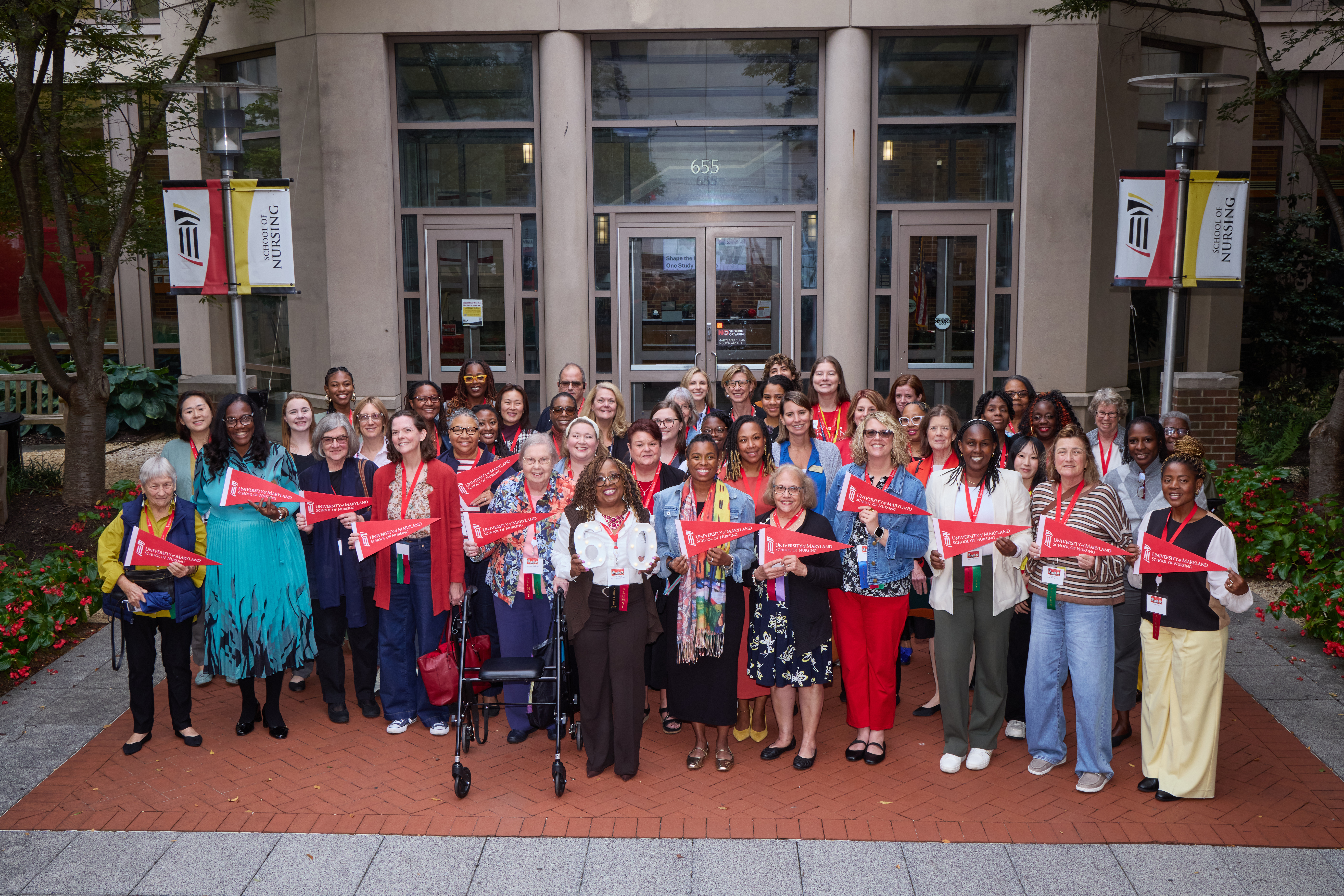
On Sept. 26, UMSON hosted a special anniversary event, “Community Health in Action: 60 Years of Caring, Innovating, and Leading,” honoring the Master of Science in Nursing CPH specialty’s rich history. It brought together alumni, students, faculty, staff, community partners, and public health leaders to recognize the impact of CPH graduates and explore the future of population and public health nursing.
“Today we celebrate more than a milestone,” said Yolanda Ogbolu, PhD '11, MS '05, BSN '04, NNP, FNAP, FAAN, the Bill and Joanne Conway Dean of the University of Maryland School of Nursing, as she welcomed attendees. “We celebrate six decades of trust, six decades of true impact, and six decades of partnership.”
Ogbolu recalled how she and Michelle R. Spencer, DNP '19, MS '06, BSN '84, RN, assistant professor and director of the CPH specialty, worked in acute care 30 years ago.
“One of the things we both realized is that we had a lot of passion about the community, and working in acute care left us with a lot of questions about how things were working and what would happen if we could impact care upstream,” Ogbolu said.
“Community and public health nursing has long been one of UMSON's defining strengths,” Ogbolu continued. “Through the Governor's Wellmobile Program, school-based health initiatives, home visitation programs, community screenings, health education efforts, neighborhood partnerships, and countless outreach initiatives, our faculty and students have worked where health truly begins, in the places where people live, learn, work, worship, and play.”
That broader perspective remains at the heart of how UMSON teaches the subject across all academic levels, Spencer said.
“For over 60 years this program has educated nurses to think about care outside the hospital,” she said. “UMSON prepares students by combining strong population health knowledge with real-world community experiences in diverse community settings.”
Highlights from 'Community Health in Action: 60 Years of Caring, Innovating, and Leading.'
UMSON BSN Program Rises to No. 9 in Nation in 2027 U.S. News & World Report Rankings
September 22, 2026
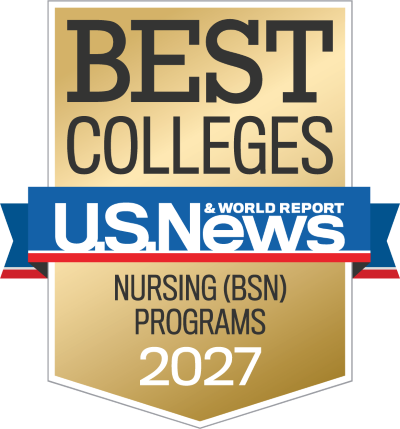
Baltimore, Md. – The University of Maryland School of Nursing’s (UMSON) Bachelor of Science in Nursing (BSN) program has moved even farther up among the 10 highest-ranked programs nationally, according to the newly released U.S. News & World Report’s 2027 “Best Colleges” Best Bachelor of Science in Nursing (BSN) Programs.
The report ranks UMSON’s BSN program No. 9 in the nation overall (tied with two other institutions), up from 13 last year, out of 671 accredited nursing schools. Among public schools of nursing, UMSON is ranked No. 7 in the nation (tied with two other public nursing schools.)
“It is extremely gratifying to be recognized as one of the top baccalaureate nursing programs in the nation,” said Yolanda Ogbolu, PhD '11, MS '05, BSN '04, NNP, FNAP, FAAN, the Bill and Joanne Conway Dean of the University of Maryland School of Nursing. “It is a testament to our program leadership, our faculty, our staff, and all those who contribute to and support our efforts. We are extremely proud of our graduates; they are well equipped to serve as highly skilled and compassionate nurses meeting the needs of individuals, their families, and the many communities we serve, not only in Maryland, but also across the nation and internationally.”
UMSON’s BSN program, which encompasses an entry-into-nursing program and an RN-to-BSN program for already licensed practicing nurses, prepares students to excel in nursing careers across a broad spectrum of acute, chronic, and community-based settings.
“We are so proud that our BSN program continues to be recognized for excellence at the national level,” said Katie McElroy, PhD '16, MS '10, BSN '98, RN, CNE, associate professor and associate dean for the baccalaureate program. “The rise in ranking highlights the hard work of the BSN students as well as the collective efforts of faculty, staff, alumni, and clinical partners who support their success. This achievement reflects not only the dedication of a community committed to the future of nursing, but also the strength of a program designed to challenge, support, and inspire students throughout their education.
“We celebrate this accolade as we continue to provide an innovative and rigorous curriculum that fosters clinical judgment, cultivates a sense of curiosity, stimulates a love of lifelong learning, and creates opportunities for students to expand their sense of what is possible for themselves and their new profession.”
U.S. News & World Report rankings are determined by scores received from surveys of top academics and officials at nursing schools or departments at institutions nationwide that are accredited by the Commission on Collegiate Nursing Education, the Accreditation Commission for Education in Nursing, or the National League for Nursing Commission on Nursing Education Accreditation. In addition, the institutions must have recently awarded at least 50 BSN degrees annually.
###
The University of Maryland School of Nursing, founded in 1889, is one of the oldest and largest nursing schools in the nation and is ranked among the top nursing schools nationwide. Enrolling nearly 2,100 students in its baccalaureate, master’s, and doctoral programs, the School develops leaders who shape the profession of nursing and impact the health care environment.
Upcoming Events
View All EventsUMSON in the News
-
BlackDoctor.com
What Your Medical Chart Says Before You Do
Meet An Expert
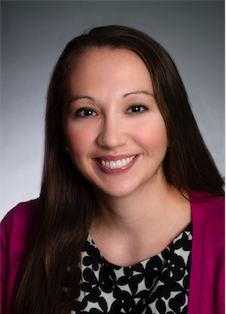
Kelly Doran, PhD, RN
“The two biggest reasons long-term care staff leave the workforce is they're stressed at work, or they have chronic health conditions that force them out. It's a win, win for everybody if we can get them to be healthier.”