UMSON Researchers Secure More Than $12 Million in Federal Research Funding
November 10, 2026
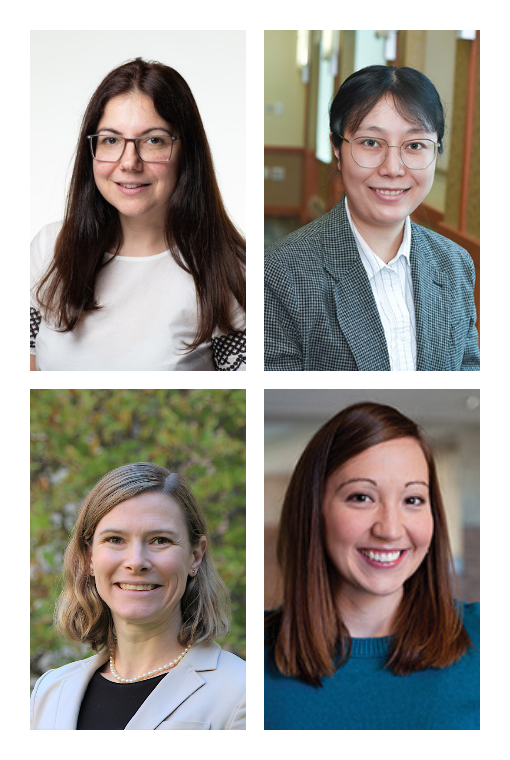
Baltimore, Md. - Researchers at the University of Maryland School of Nursing (UMSON) have recently received $12,184,811 in federal research funding to advance studies addressing chronic pain, cancer-related fatigue, and the health and well-being of older adults. The funding supports four projects, including three prestigious R01 grants from the National Institutes of Health (NIH), its flagship Research Project Grant program.
R01 grants support independent investigations into important biomedical and public health questions. Together, the projects aim to improve how chronic pain is understood and managed, explore ways to ease fatigue among people living with cancer, and promote healthier, more active lives for residents in assisted living communities.
Investigating Chronic Pain and the Role of Placebos
Luana Colloca, MD, PhD, MS, professor and interim chair of UMSON’s Department of Pain and Translational Symptom Science, received a four-year, $4,929,839 R01 grant from the National Center for Complementary and Integrative Health (NCCIH), collaborating with Susan G. Dorsey, PhD '01, MS '98 professor, and Shuo Chen, PhD, professor at the University of Maryland School of Medicine. With Colloca as principal investigator, the team will examine the biological, psychological, and environmental factors that shape pain and placebo responses, focusing in part on temporomandibular disorders. By combining clinical information with genetic and other biological data, the researchers aim to develop tools that could help predict how individuals experience pain and respond to treatment — an important step toward more personalized approaches to pain management.
Yang Wang, PhD, assistant professor, received a three-year, $692,332 NIH R34 grant from NCCIH to study whether an open-label placebo — a placebo patients know they are receiving — can help people manage chronic pain when paired with strategies designed to strengthen positive expectations. The study will assess whether this approach is acceptable to patients and practical to use. An R34 grant supports early-stage research to determine whether an approach is feasible and ready for larger studies.
Exploring a New Approach to Cancer-Related Fatigue
Amber Kleckner, PhD, assistant professor, received a five-year, $2,962,131 R01 grant from the National Cancer Institute. Her study will explore whether time-restricted eating can help reduce fatigue and frailty among people living with cancer. Participants will follow a 10-hour daytime eating window and a 14-hour overnight fast, an approach researchers will compare with nutrition counseling. The 12-week study will include 132 adults age 60 and older with advanced prostate cancer or metastatic breast cancer. Researchers will assess fatigue, frailty, daily body rhythms, and other physiological measures.
Kleckner also received a one-year, $411,000 R21 grant from the National Cancer Institute last spring to investigate the relationship between daily rest-and-activity patterns and cancer-related fatigue. R21 grants are specifically designed to support early-stage research projects that introduce completely novel scientific concepts. This earlier research examines how disruptions in the body’s natural daily rhythms may contribute to fatigue. (The R21 award is not included in the $12,184,811 total reported here.)
Helping Assisted Living Residents and Staff Stay Active
Kelly Doran, PhD '11, MS '08, RN, FAAN, associate professor and co-director of the Building Healthy Behaviors Across the Life Span Organized Research Center, received a five-year, $3,600,509 R01 grant from the National Institute of Nursing Research. Her project, the Worksite Heart Health Improvement Project + Function Focused Care, brings together workplace heart-health strategies and an approach that encourages older adults to be as physically active as possible during everyday care.
The study will take place in eight assisted living facilities and will examine ways to help staff set and meet physical activity goals, create environments and policies that support movement, and incorporate activity into residents’ daily care. Researchers will evaluate effects on physical activity, physical and psychological well-being, and staff retention. The goal is to identify practical ways to make movement a regular part of life in assisted living communities.
By supporting staff in their own health goals and helping them encourage residents to stay active, the project could benefit the well-being of all members of assisted living communities.
###
The University of Maryland School of Nursing, founded in 1889, is one of the oldest and largest nursing schools in the nation and is ranked among the top nursing schools nationwide. Enrolling nearly 2,100 students in its baccalaureate, master’s, and doctoral programs, the School develops leaders who shape the profession of nursing and impact the health care environment.