

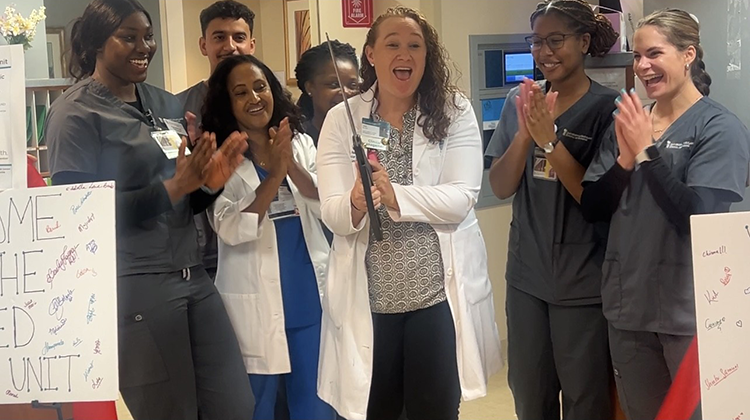
Dedicated education units thrive through collaboration between nursing education and practice. Their purpose is to close the academic-practice gap by providing students with meaningful clinical experiences while supporting preceptors in developing expert clinical teaching skills. DEUs create an intentional cycle where practice informs education and education enhances practice, enabling both to adapt to the evolving health care landscape. This approach ensures that nursing education remains relevant and responsive to real-world health care needs while simultaneously elevating the quality of patient care.
About the Dedicated Education Unit
The Dedicated Education Unit (DEU) is an innovative model in nursing education that transforms a traditional clinical unit into a dynamic teaching and learning environment. This transformation is made possible through the collaboration of nursing professionals, administrative leaders, and academic faculty, all working together. The main goal of the DEU is to immerse nursing students in clinical experiences that blend the expertise of both practicing clinicians and academic educators.
What makes a dedicated education unit distinct is its dual focus on educating students and developing staff nurse preceptors. Academic faculty not only facilitate student learning but also collaborate with staff nurse preceptors to foster their professional development, building a strong partnership between the academic and clinical settings.
In this model, experienced clinical nurses take on the role of primary instructors for students. The staff who participate in the DEU do so voluntarily, working alongside faculty as preceptors and demonstrating clinical excellence. The DEU clinical instructor is dually employed by the clinical organization and the educational institution. Before taking on these responsibilities, all unit staff undergo comprehensive workshops that introduce them to the DEU model, define expected clinical outcomes, and provide evidence-based teaching strategies to enhance hands-on education. This initial training is further supported by ongoing professional development, ensuring the learning environment stays current and relevant.
The DEU fosters a learning culture built on mutual respect, open communication, and interprofessional collaboration. Everyone involved, whether clinical staff, faculty, or students, shares the common goal of creating an optimal learning community where knowledge and skills are exchanged freely.
Throughout the clinical day, clinical instructors are consistently present to support staff in their teaching roles. They help bridge the gap between theory and practice, ensure learning objectives are being met, and step in to resolve any student-related challenges that may arise. While faculty have the ultimate responsibility for evaluating students, they collaborate with the nursing staff to provide a well-rounded assessment of student performance.
This integrated approach not only elevates the quality of nursing education but also strengthens the connection between academic institutions and health care facilities. As a result, it helps improve the transition from student to practicing nurse and is supportive of a culture of continuous improvement in health care.
FAQs
What is a Dedicated Education Unit (DEU)?
A DEU is a collaborative model in nursing education that transforms a traditional hospital unit into an immersive clinical teaching and learning environment, led jointly by clinical staff and academic faculty.
How is the DEU different from traditional clinical placements?
Unlike traditional placements, the DEU empowers staff nurses to serve as primary instructors for students, with support and collaboration from faculty, fostering a true academic-practice partnership.
What role do staff nurses play in the DEU?
Staff nurses volunteer to serve as preceptors after receiving initial and ongoing professional development. They teach students at the bedside while collaborating with faculty to ensure high-quality learning experiences.
What is the role of academic faculty in the DEU?
Faculty support both students and preceptors by facilitating teaching, ensuring learning objectives are met, providing real-time guidance, and evaluating student performance in partnership with preceptors.
How does the DEU benefit nursing students?
Students develop core clinical skills, enhance their clinical judgment, integrate into the care team, and gain increased exposure to hands-on learning — often 10 - 18% more than traditional models.
How are preceptors supported in their teaching role?
Preceptors attend workshops that introduce evidence-based teaching strategies and receive ongoing mentoring and coaching from faculty to grow their skills as clinical educators.
Can preceptors gain professional recognition through the DEU?
Yes. Preceptors may become eligible for the CNE-cl credential through the National League for Nursing and may qualify for clinical ladder advancement in some organizations.
What are the organizational benefits of implementing a DEU?
Organizations see improved workforce development, higher new graduate retention, cost-effective education, quality care improvements, and enhanced reputation for nursing excellence.
How does the DEU strengthen academic-practice partnerships?
By aligning education with real-world practice, DEUs allow health systems to shape curricula, improve collaboration, and support both preceptor and student development.
Does the DEU impact new graduate readiness?
Absolutely. Students educated in DEUs transition more smoothly into practice, with reduced orientation time and greater familiarity with the organization’s culture and expectations.
How can I get started if I’m interested in creating or joining a DEU?
To get started, contact the DEU team at the Maryland Nursing Workforce Center by emailing Tolvalyn Dennison at tolvalyn.dennison@umaryland.edu. The team will guide you through the process and connect you with the appropriate resources and training.
Have Questions or Need Support?
Reach out to the DEU team at the Maryland Nursing Workforce Center:
- Tolvalyn Dennison, MSN, RN, AGCNS-BC, CNE
Project Director
dennison@umaryland.edu - Jen Dalton, PhD, RN, CNE, CHSE
Project Faculty
dalton@umaryland.edu - Denise Owens, DNP, RN, CCRN, CNE
Project Coordinator
owens@umaryland.edu - Crystal DeVance-Wilson, PhD, MBA, PHCNS-BC
Project Administrator
devance-wilson@umaryland.edu